
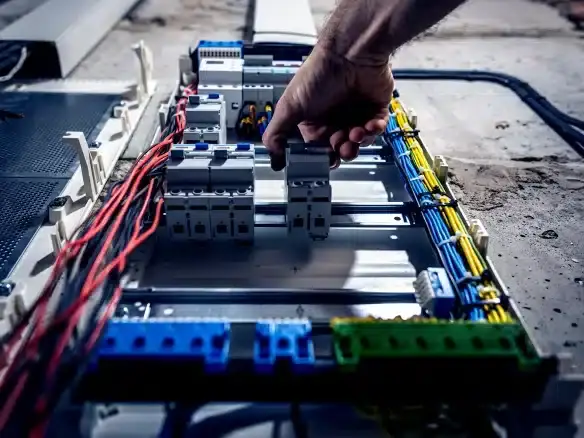
When Does a Circuit Breaker Need to Be Replaced?
Most breakers last for decades, but heat, wear and a few problem panel brands can cut that short. Here are the signs a breaker has failed, what an electrician does about it and when it is urgent.
Quick Answer
A circuit breaker needs to be replaced when it is hot, scorched, buzzing, will not stay on, trips with no load, or no longer trips when it should. Breakers can last 30 years or more, but heat, loose connections, repeated tripping and moisture wear them out sooner. A licensed electrician tests the breaker and the circuit to find out whether the breaker failed or something else caused the problem.
Key Guide Highlights
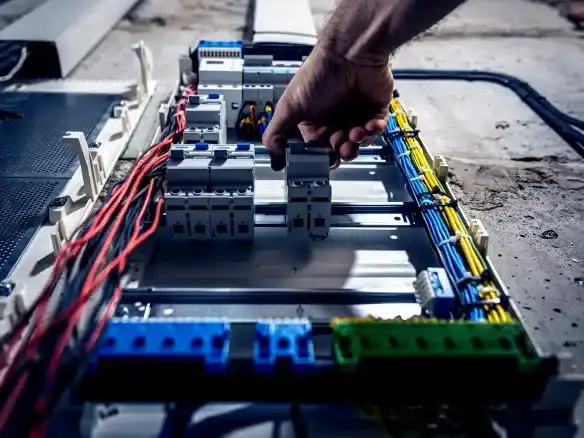
The Short Answer
A circuit breaker is a safety switch. It watches the current on one circuit and shuts it off when there is too much, before the wires get hot enough to start a fire. Newer breakers also watch for ground faults and arc faults.
A good breaker can work for decades. It needs to be replaced when it stops doing that job reliably. That shows up in two ways. Either it trips when it should not, or it fails to trip when it should. The second one is more dangerous, because you will not notice it until something goes wrong.
The signs below tell you a breaker may be failing. Only testing by a licensed electrician tells you for sure, and whether the breaker is the real problem.
What Are the Signs a Breaker Is Failing?
Any one of these is a reason to have the panel looked at. Several together point strongly to a breaker or panel problem.
1. The Breaker Feels Hot or Looks Scorched
A breaker should feel close to room temperature. Heat usually means a loose connection where the wire meets the breaker, or a poor connection between the breaker and the bus bar it clips onto. Loose connections create resistance, and resistance creates heat. Over time the heat damages the breaker, the wire and sometimes the panel itself. Brown or black marks, melted plastic or a burning smell mean that damage has already started.
2. It Will Not Stay On
A breaker that trips again right away, even with nothing plugged into the circuit, may have failed inside. It can also mean there is a short circuit in the wiring. Either way, the circuit should stay off until an electrician finds the cause. Repeatedly forcing a breaker back on adds wear and can turn a small fault into a fire.
3. It Trips at Light Loads
Breakers weaken with age and with every trip. A worn breaker can start tripping on loads it handled for years, like a hair dryer or a space heater. This is called nuisance tripping. Sometimes it is the breaker. Often it is an overloaded circuit, a failing appliance or a wiring fault. Our guide on why a breaker keeps tripping explains those other causes.
4. Buzzing, Crackling or Sizzling
A breaker should be silent. Buzzing or crackling usually means arcing, which is electricity jumping across a loose or damaged connection. Arcing produces intense heat. Treat it as urgent.
5. The Handle Feels Loose or Will Not Latch
A handle that feels mushy, flops between positions or will not latch on points to worn parts inside the breaker. It may not be able to trip properly anymore.
6. Water, Rust or Corrosion
Panels in garages, basements and outside walls can take on moisture during wet Willamette Valley winters. Corrosion on breakers or the bus bar weakens connections and can stop breakers from tripping. A panel that has been wet needs a full inspection, not just a new breaker.
7. It Is a Brand With Known Problems
Some older panels, such as Federal Pacific Stab-Lok and certain Zinsco panels, have breakers with a history of failing to trip under overload. In these panels the concern is the whole panel design, not one breaker. An electrician will usually recommend replacing the panel rather than swapping breakers one at a time.
What Does Each Sign Mean, and How Urgent Is It?
Use this as a guide to how soon to call. When in doubt, call sooner.
| What You Notice | What It Usually Means | How Urgent |
|---|---|---|
| Burning smell, smoke or scorch marks | Overheating or arcing at the breaker or panel | Emergency |
| Buzzing or crackling from the panel | Arcing at a loose or damaged connection | Same day |
| Breaker warm to the touch | Loose connection or overloaded circuit | Soon |
| Trips right away with nothing on | Failed breaker or short circuit | Soon |
| Trips on small, normal loads | Worn breaker, overload or appliance fault | Schedule a visit |
| Federal Pacific or Zinsco panel | Breakers that may not trip under overload | Plan replacement |
How Does an Electrician Decide Whether to Replace a Breaker?
Replacing a breaker that is not the problem fixes nothing. A good electrician confirms the cause first. A typical service call includes:
- Checking the breaker and panel for heat with a thermal camera or temperature meter
- Measuring the current on the circuit to see whether it is overloaded
- Testing the wiring on the circuit for shorts and ground faults
- Checking the connection between the breaker and the bus bar for pitting or burn marks
- Confirming the breaker size matches the wire size, since an oversized breaker will not protect the wire
- Confirming any replacement breaker is listed for that panel, because mixing brands can cause poor connections
Is It Just the Breaker, or the Whole Panel?
Often a single breaker swap solves the problem. But sometimes the breaker is a symptom. If the bus bar is burned, if several breakers run hot, if the panel is corroded, or if it is a brand with a known failure history, a new breaker will not make the panel safe.
Older homes in Salem, Keizer and Portland often have panels that are full, double-tapped or past their service life. In those cases an electrician may recommend a panel replacement. Our guide on signs you need an electrical panel upgrade covers that decision in detail.
Why Is Breaker Replacement Not a DIY Job?
The main lugs and service wires inside a panel stay energized even with the main breaker off. Removing the cover exposes those live parts. A slip can cause a serious shock or an arc flash. Choosing the wrong breaker, or seating it poorly, can create the exact overheating problem you were trying to fix. Panel work in Oregon also generally calls for a licensed electrician and, in many cases, a permit.
Your part is simple. Do not reset a breaker that trips right back off. Do not keep using a circuit that buzzes, smells hot or shows scorch marks. If there is smoke, a burning smell or visible scorching at the panel, shut off the main breaker only if you can do so safely, leave the area and call an electrician. If you see flames, get everyone out and call 911.
Common Questions
How long do circuit breakers last?
Many breakers last 30 years or more in a clean, dry panel with good connections. Heat, moisture, loose connections and frequent tripping shorten that. Age alone is not a reason to replace a breaker that tests fine, but a breaker that shows any warning signs should be checked.
Can a breaker go bad without tripping?
Yes. A worn or defective breaker can fail to trip during an overload or short. That is the most dangerous kind of failure, because nothing seems wrong. It is one reason electricians test breakers in older panels and recommend replacing panels from brands with known trip failures.
Is a breaker that trips often a bad breaker?
Not always. A breaker that trips is often doing its job. The circuit may be overloaded, or an appliance or wire may have a fault. An electrician tests the circuit and the breaker to tell the difference, so you only replace what has actually failed.
Breaker and Panel Service From Empyre Electric
Our licensed electricians test and replace failing breakers and upgrade electrical panels for homes across Woodburn, Salem, Keizer, Portland and the Willamette Valley. We find the real cause before we replace anything, use breakers listed for your panel, and tell you honestly whether a single breaker or the whole panel is the issue.
If your breaker trips often, read our guide on why a breaker keeps tripping. If your panel is older, our guide on whether 100-amp service is enough can help you plan. Seeing heat, buzzing or scorch marks? Contact us and we will get an electrician out to you.
Verified by Empyre Electric Licensed Electricians
Written by our licensed electrical team in Woodburn, Oregon (Oregon CCB #249777). Code-compliant, safe, and tailored for residential and commercial electrical systems across Portland, Salem, and the Willamette Valley.
More Electrical Guides
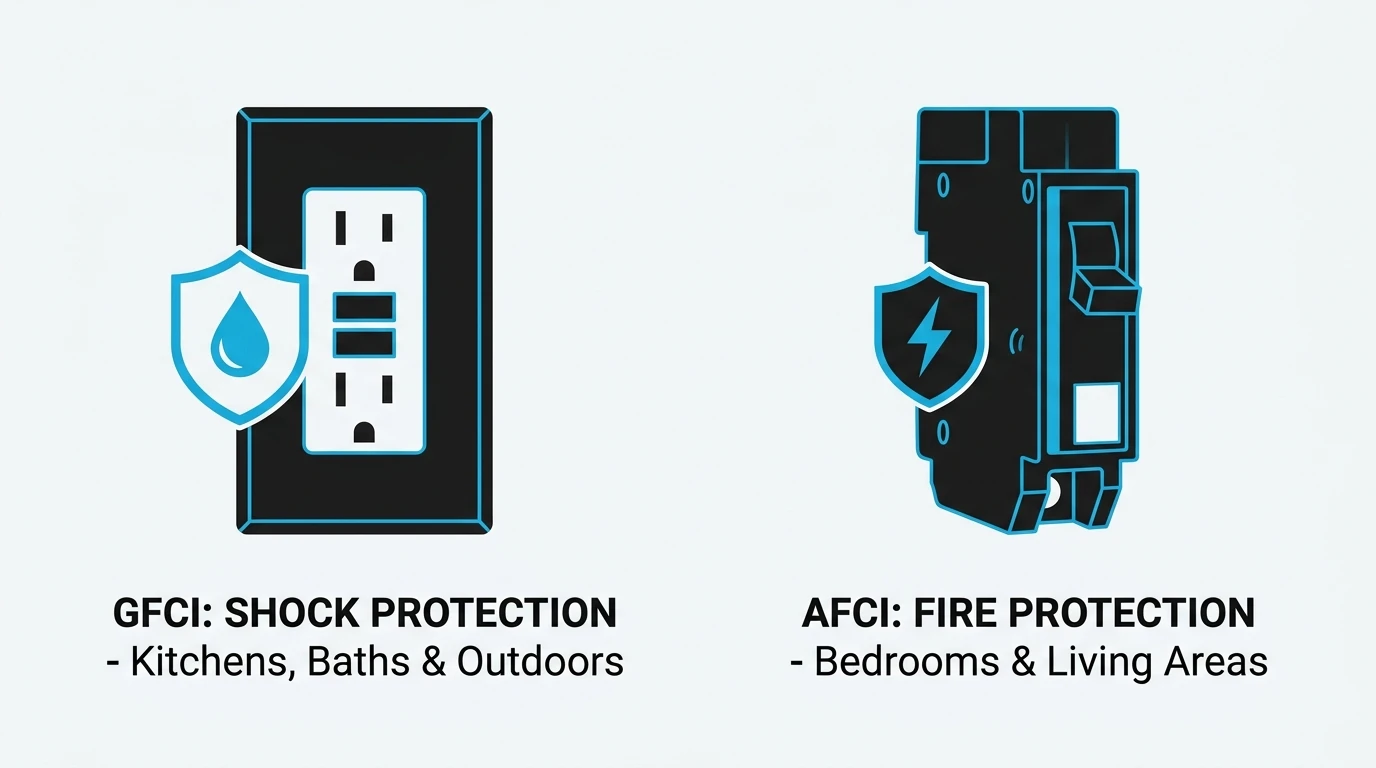
GFCI vs. AFCI Outlets
GFCI outlets protect people from dangerous electrical shocks, while AFCI breakers protect homes from electrical fires. Here is how each device works and where Oregon code requires them.
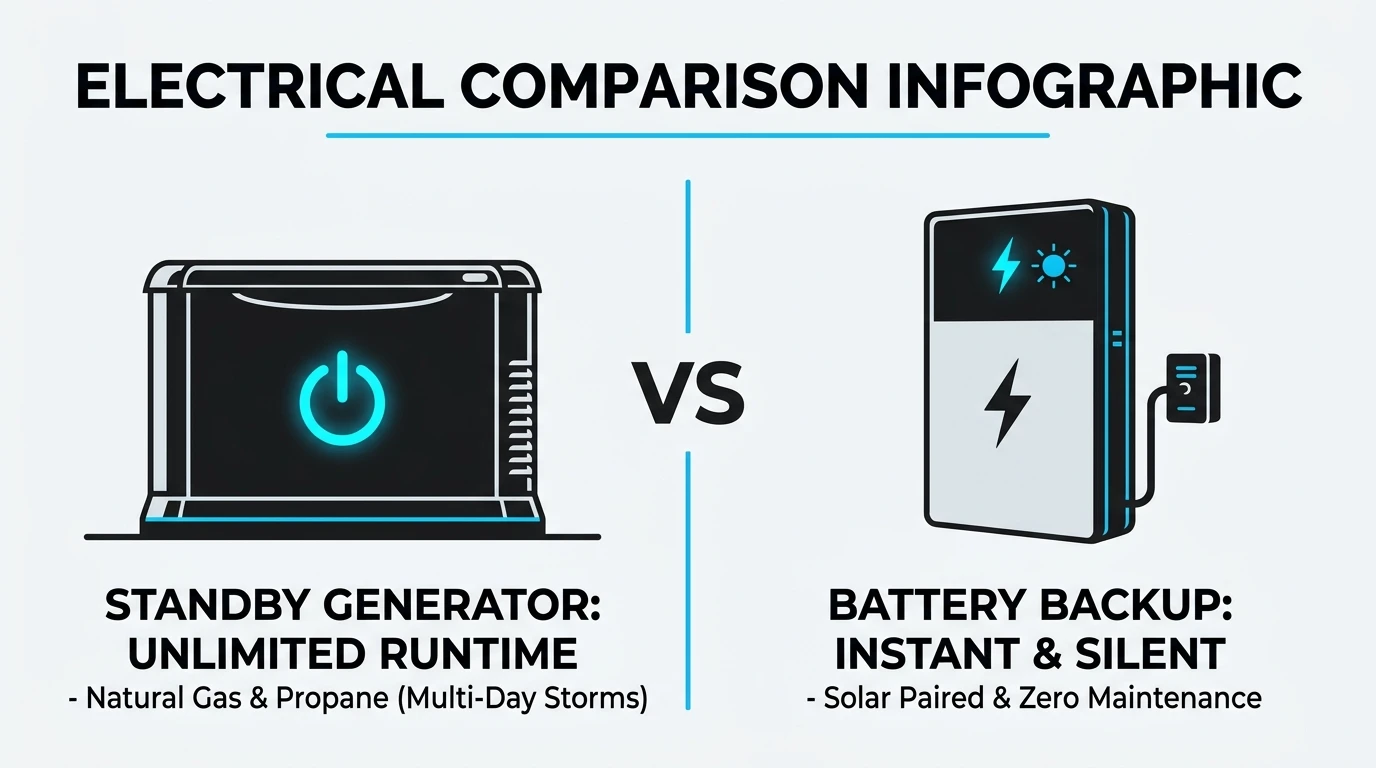
Generators vs. Battery Backup
Comparing standby generators and solar battery backup systems for Oregon power outages. Winter storm runtimes, power capacity, maintenance, and which option fits your home.
Knob and Tube Wiring: Is It Safe?
Knob and tube wiring powered homes built before the 1940s. Here is how to spot it, why it becomes a fire risk with age, and what Oregon homeowners can do about it.
Why Does My Breaker Keep Tripping?
What a breaker trip means, the four reasons breakers trip, what the timing of the trip tells you, and what an electrician does to fix it for good.
8 Signs You Need an Electrical Panel Upgrade
Flickering lights, a full panel, an old fuse box or a new EV charger on the way. The eight signs your electrical panel is due for an upgrade, and what the process looks like in Oregon.

Why Is My Outlet Not Working, and Why Won't the GFCI Reset?
Why outlets stop working, why a GFCI outlet won't reset, the warning signs that mean stop using it, and what an electrician checks.
Whole House Surge Protectors: Do You Need One?
A whole house surge protector mounts at your electrical panel and guards every circuit in the home. Here is what it protects, who benefits most, and how it works with plug-in strips.
How Many Outlets Can Go on a 20 Amp Circuit?
The electrical code does not set a hard limit for most home outlets, but there is a practical answer. Here is the common planning rule, the rooms that need their own 20 amp circuits, and why wire size matters.
Level 2 EV Charger Installation at Home
A Level 2 charger can refill most EVs overnight. Here is what a home install involves, how the circuit is sized, hardwired vs. plug-in options, and why the panel and wiring work belongs to a licensed electrician.
Aluminum Wiring in Older Homes: Risks and Fixes
Many homes built in the mid 1960s to mid 1970s have aluminum branch wiring. Here is why it can be a fire risk, the warning signs to watch for, and the repair options a licensed electrician can offer.
Why Do My Lights Flicker?
Flickering lights can be a small nuisance or an early sign of a loose connection. Here is what causes flicker, what each cause means for safety, what an electrician does about it and when it is urgent.
Is 100-Amp Service Enough for Your House?
Many older Oregon homes still run on 100-amp service. Here is when 100 amps is enough, when it is not, what a load calculation shows and when the panel is a safety concern.