Generators vs. Battery Backup
Comparing standby generators and solar battery backup systems for Oregon power outages. Winter storm runtimes, power capacity, maintenance, and which option fits your home.
Quick Answer
Whole-home standby generators provide power for days during major Oregon winter storms and handle the heaviest loads. Battery backup systems provide silent, instantaneous power with zero maintenance, best paired with solar panels.
Key Guide Highlights
The Reality of Power Outages in Oregon
Pacific Northwest winters bring heavy rain, severe ice storms, and high winds that knock down trees across power lines. In western Oregon and the Willamette Valley, it is not uncommon for neighborhoods to lose grid power for 3 to 7 consecutive days.
When the power goes out, heat pumps shut off, pipes risk freezing, refrigerators warm up, and well pumps stop supplying water. Homeowners facing these storms have two main options for reliable backup power: a whole-home standby generator or a home battery backup system.
How Whole-Home Standby Generators Work
A whole-home standby generator is an outdoor mechanical unit (about the size of an air conditioner) that connects directly into your home's natural gas line or an on-site propane tank.
Automatic Operation
When the utility grid loses power, an Automatic Transfer Switch (ATS) detects the outage within seconds, signals the generator engine to start, and transfers your home's electrical circuits over automatically. You don't have to wheel out equipment in the freezing rain or pull starter cords.
Advantages of Standby Generators
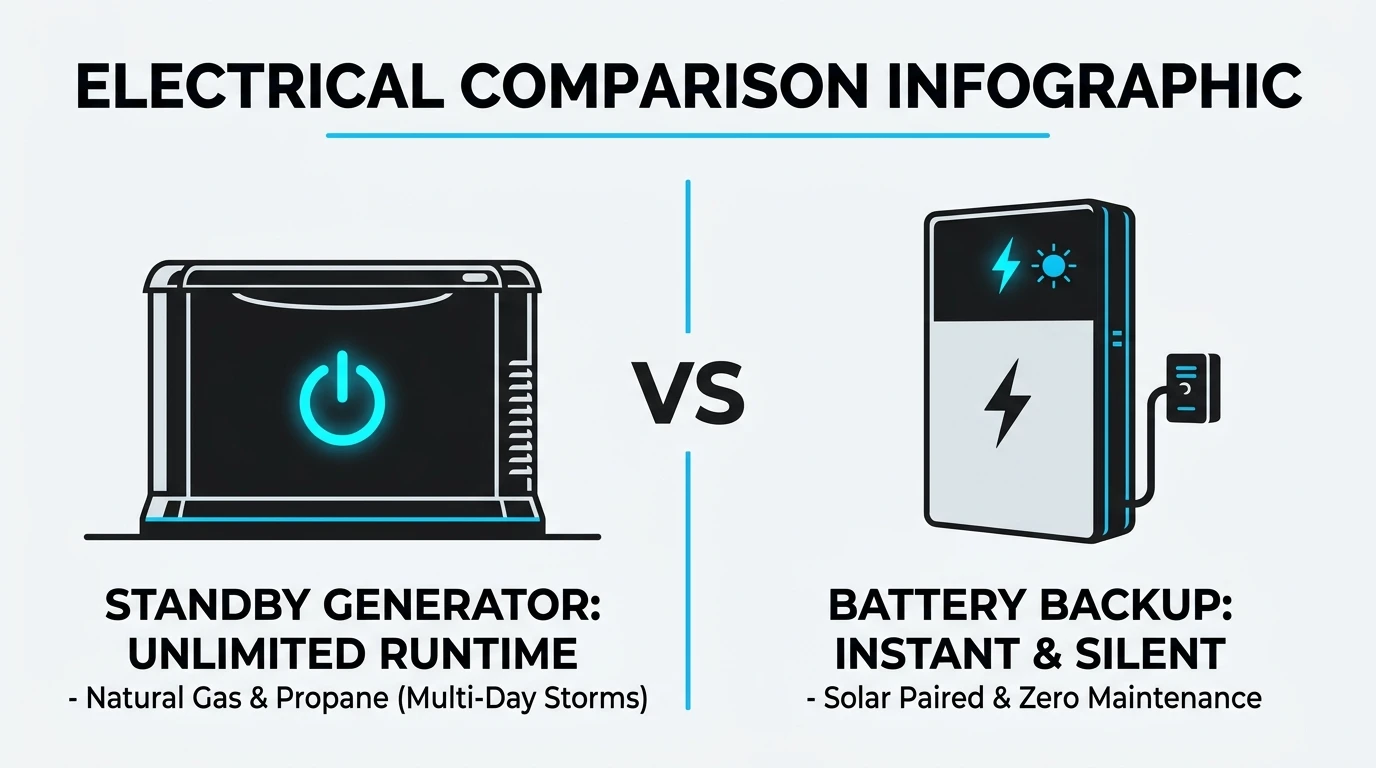
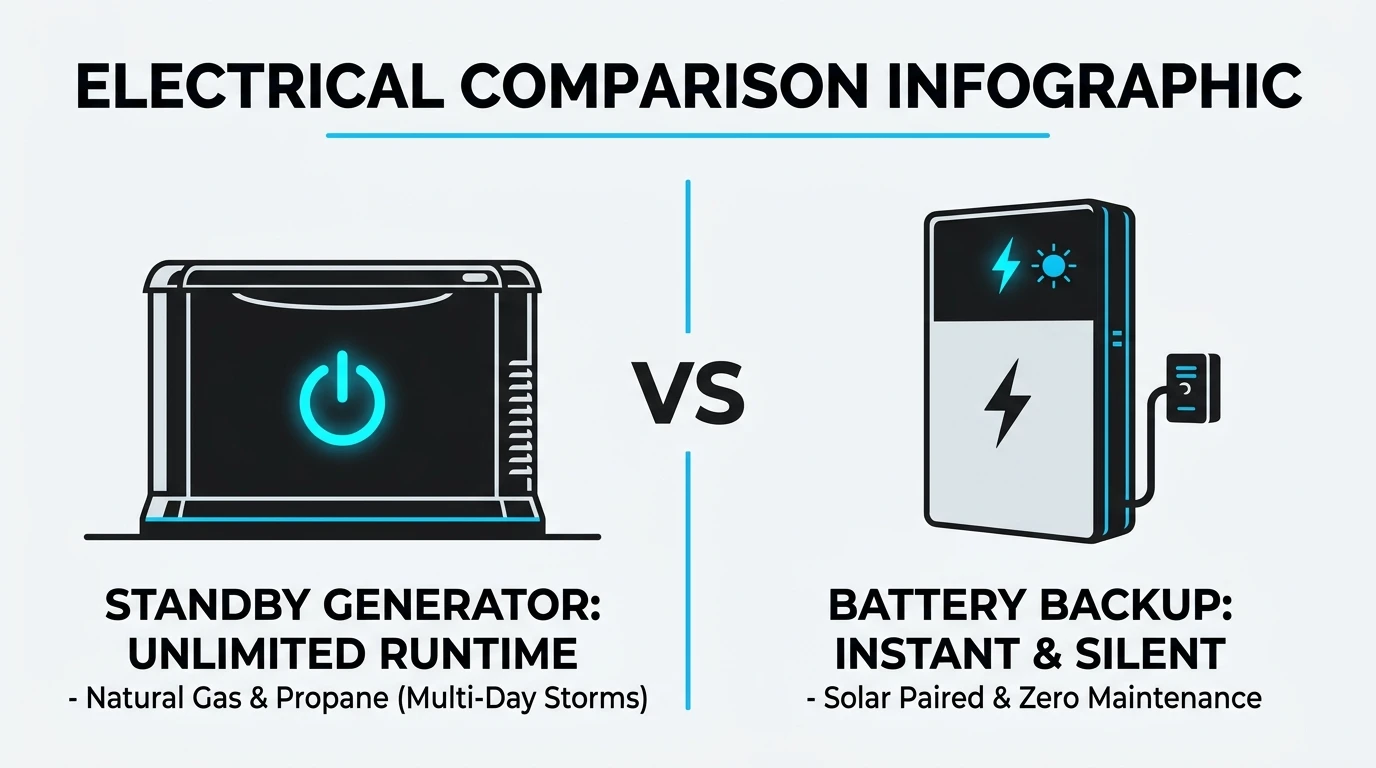
Unlimited Runtime: As long as natural gas flows or your propane tank is full, a generator can run for weeks uninterrupted.
High Power Capacity: Standard 18kW to 26kW generators produce enough power to run whole-home central heat pumps, electric stoves, and well pumps simultaneously.
Drawbacks of Generators
Noise & Exhaust: Generators have internal combustion engines that produce sound and engine exhaust outside your home.
Annual Maintenance: Requires yearly oil changes, spark plug checks, and filter replacements.
Brief 15-Second Delay: Power takes 10 to 20 seconds to kick on after an outage begins.
How Home Battery Backup Systems Work
A home battery backup system (such as Tesla Powerwall, Enphase, or SolarEdge) uses wall-mounted lithium-ion battery packs that store electricity from the power grid or rooftop solar panels.
Seamless, Silent Power
When the grid goes down, a battery system switches on in less than 20 milliseconds. The transfer is so fast that clocks don't reset, computers don't shut off, and light bulbs don't even flicker.
Advantages of Battery Systems
100% Silent & Clean: No engine noise, no exhaust fumes, and zero mechanical vibration.
Zero Maintenance: Solid-state electronics with no oil, fuel filters, or moving parts.
Daily Utility Bill Savings: In areas with time-of-use electric rates, batteries can charge during cheap off-peak hours and discharge during peak times to reduce your monthly power bill.
Solar Recharging: When paired with solar panels, batteries recharge during the day for continuous sustainable energy.
Drawbacks of Batteries
Limited Capacity: A standard 10kWh to 13.5kWh battery powers essential household circuits for about 12 to 24 hours without solar recharge.
Winter Recharging Challenges: During dark, overcast Oregon winter storms, solar panels produce very little power, making multi-day battery recharging difficult.
Higher Upfront Investment: Whole-home battery systems require a larger initial investment than standby generators.
Generators vs. Batteries: Side-by-Side Comparison
Compare the key differences between standby generators and battery backup systems to see which meets your family's needs:
| Feature | Standby Generator | Battery Backup System |
|---|---|---|
| Outage Duration | Unlimited (with continuous fuel) | 12–24 Hours (per battery unit) |
| Transfer Speed | 10 to 20 seconds | Instantaneous (under 20 ms) |
| Noise Level | Moderate engine hum (60–68 dBA) | Completely Silent (0 dBA) |
| Maintenance | Annual oil & filter service | Zero maintenance required |
| Daily Value | Emergency backup only | Daily peak utility rate savings |
Which System Is Right for Your Oregon Home?
The best choice depends on where you live, your home's heating system, and how long typical outages last in your area:
Choose a Standby Generator If:
You live in rural Oregon, the foothills, or areas with frequent multi-day winter power outages.
You rely on an electric heat pump, electric furnace, or private well pump that draws heavy power.
You already have a reliable natural gas connection or an existing large propane tank on your property.
You want the most backup power capacity for long outages.
Choose a Battery Backup If:
You have rooftop solar panels or plan to install solar in the near future.
You live in a dense suburban neighborhood with strict noise restrictions.
Your main goal is protecting sensitive home office equipment, internet routers, refrigerators, and lights during short outages.
You prefer a set-it-and-forget-it system with zero engine maintenance or fuel storage.
The Hybrid Approach: Best of Both Worlds
For the ultimate in resilience, some Oregon homeowners install a hybrid setup: a modest battery system for instant, silent power on daily essential circuits, paired with an automatic standby generator that kicks in during extended multi-day winter storms.
Empyre Electric specializes in designing and installing both generator transfer switches and solar battery backup systems. We calculate your home's exact power load and recommend the right system for your budget.
Verified by Empyre Electric Licensed Electricians
Written by our licensed electrical team in Woodburn, Oregon (Oregon CCB #249777). Code-compliant, safe, and tailored for residential and commercial electrical systems across Portland, Salem, and the Willamette Valley.
More Electrical Guides
GFCI vs. AFCI Outlets
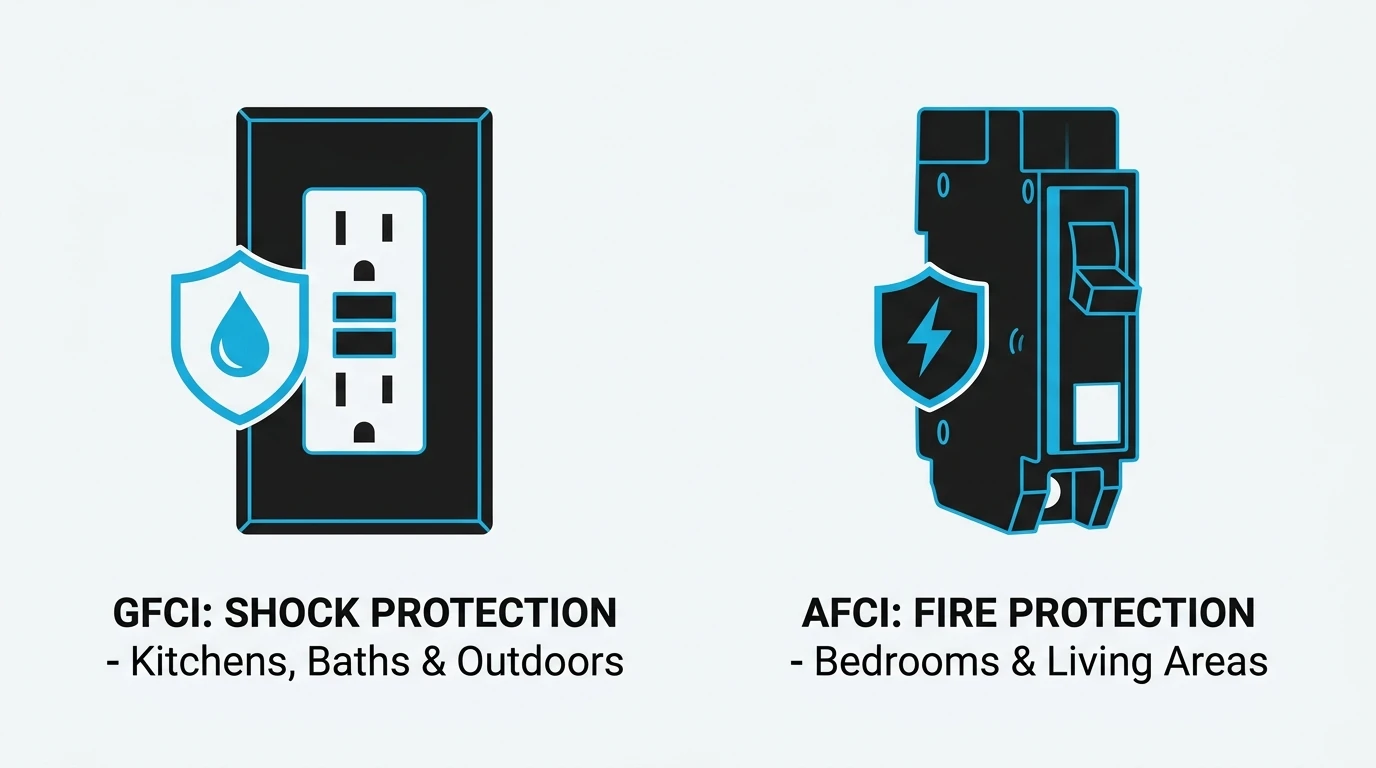
GFCI outlets protect people from dangerous electrical shocks, while AFCI breakers protect homes from electrical fires. Here is how each device works and where Oregon code requires them.
Knob and Tube Wiring: Is It Safe?
Knob and tube wiring powered homes built before the 1940s. Here is how to spot it, why it becomes a fire risk with age, and what Oregon homeowners can do about it.
Breaker Keeps Tripping? How to Reset It and Find the Cause
How to safely reset a tripped breaker, the four reasons breakers trip, and the warning signs that mean you need an electrician instead of another reset.
8 Signs You Need an Electrical Panel Upgrade
Flickering lights, a full panel, an old fuse box or a new EV charger on the way. The eight signs your electrical panel is due for an upgrade, and what the process looks like in Oregon.

Outlet Not Working? Why a GFCI Won't Reset and How to Fix It
Dead outlet, half an outlet working, or a GFCI that won't reset? Six quick checks that solve most dead outlets, and the warning signs that mean you should stop and call.