
How Many Outlets Can Go on a 20 Amp Circuit?
The electrical code does not set a hard limit for most home outlets, but there is a practical answer. Here is the common planning rule, the rooms that need their own 20 amp circuits, and why wire size matters.
Quick Answer
For general-purpose outlets in a home, the National Electrical Code does not set a maximum number on a 20 amp circuit. A common planning rule counts 1.5 amps per outlet and keeps the load at 80 percent of the breaker, or 16 amps. That works out to about 10 outlets. Kitchens, bathrooms and laundry rooms have their own 20 amp circuit rules, and a 20 amp circuit needs 12 AWG copper wire.
Key Guide Highlights
The Short Answer
In a home, the National Electrical Code does not limit how many general-purpose outlets can go on a 20 amp circuit. You could legally have more than 10. The code instead focuses on wire size, breaker size and which rooms need their own circuits.
That does not mean any number is a good idea. Electricians plan circuits around the load people will actually plug in. A circuit with too many busy outlets will trip its breaker, and a circuit with too few wastes panel space.
Most electricians use a simple rule of thumb that lands at about 10 outlets on a 20 amp circuit. The sections below explain where that number comes from and when it changes.
Where the "About 10" Rule Comes From
The planning rule uses two simple ideas.
- Plan for about 1.5 amps per outlet. Most outlets sit unused most of the time, so this is an average, not a maximum.
- Keep the steady load at or below 80 percent of the breaker rating. For a 20 amp breaker, 80 percent is 16 amps.
- Divide 16 amps by 1.5 amps per outlet. The result is about 10 outlets.
Why the 80 Percent Rule Matters
The code treats a load that runs for three hours or more as a continuous load. Breakers and wire are sized so continuous loads stay at or under 80 percent of the circuit rating. This keeps wire and connections from running hot for long periods.
Most outlet loads are not continuous. A hair dryer or vacuum runs for a few minutes. Still, the 80 percent target gives you a safe margin when several things run at once. It is the main reason electricians stop well short of the breaker rating when planning outlets.
For commercial buildings, the code does use a set number. Each general-purpose receptacle counts as 180 volt-amps, which allows about 13 on a 20 amp circuit. Homes are calculated a different way, so that limit does not apply to general outlets in a house.
Rooms With Their Own 20 Amp Circuit Rules
Some rooms need dedicated 20 amp circuits no matter how many outlets they have. These rules come from the national code. Your local inspector applies the edition Oregon has adopted.
| Area | Code Requirement | What It Means for You |
|---|---|---|
| Kitchen countertops | At least two 20 amp small-appliance circuits | Toasters, kettles and mixers share these circuits only |
| Bathrooms | At least one 20 amp circuit for bathroom outlets | Hair dryers and curling irons get enough power |
| Laundry | At least one 20 amp circuit for laundry outlets | The washer and nearby outlets do not share with other rooms |
| Garage | At least one 20 amp circuit for garage outlets in newer code editions | Power tools and freezers have room to run |
Wire Size: 12 AWG for 20 Amps
A 20 amp circuit needs 12 AWG copper wire. A 15 amp circuit can use 14 AWG. The breaker protects the wire, so the wire must be rated for the full breaker size.
This is one of the most common problems electricians find in older homes and past remodels. Someone swaps a 15 amp breaker for a 20 amp breaker to stop nuisance tripping, but the wire is still 14 AWG. The breaker no longer protects that wire. It can overheat inside the wall before the breaker trips. This is a fire hazard.
If a breaker trips often, the fix is never a bigger breaker. The fix is to find the cause and, if needed, add a new circuit.
15 Amp or 20 Amp Outlets?
Standard 15 amp outlets are allowed on a 20 amp circuit when there are two or more outlets on that circuit. This is normal in most homes.
If a 20 amp circuit feeds just one single outlet, that outlet must be rated for 20 amps. You can spot a 20 amp outlet by the small sideways T shape on one slot.
When to Use Fewer Outlets per Circuit
The rule of thumb is a starting point. A good electrician plans fewer outlets per circuit in places with heavy use.
- Home offices with computers, monitors, printers and space heaters
- Entertainment areas with large TVs, game systems and audio equipment
- Workshops and garages where power tools run
- Bedrooms where window AC units or space heaters are used
- Any spot where a single appliance draws a large share of the circuit
Signs a Circuit Has Too Much on It
If your outlets were added over the years, one circuit may be carrying more than it should. Watch for these signs:
- The same breaker trips when two appliances run at once
- Lights dim when a vacuum, heater or microwave starts
- Outlets or cover plates feel warm to the touch
- You rely on power strips and extension cords in several rooms
- You smell a hot or burning odor near an outlet
Why This Is Not a DIY Project
Adding outlets or circuits means working on wiring and inside the electrical panel. Parts of the panel stay energized even with the main breaker off. Mistakes can cause shock, burns or a hidden fire hazard.
Oregon requires an electrical permit for new circuits and most wiring changes, and the work must pass inspection. Hire a licensed electrician. They will check your panel capacity, size the wire and breaker correctly and handle the permit.
Oregon adopts the National Electrical Code through the Oregon Electrical Specialty Code, with its own amendments. Your local inspector and the adopted code edition have the final say on what is required in your home.
Common Questions
Is there a code limit on outlets per circuit in a house?
Not for general-purpose outlets in a home. The National Electrical Code does not set a number. Electricians use load planning, often about 10 outlets on a 20 amp circuit, to keep the circuit from overloading.
Can I put 15 amp outlets on a 20 amp circuit?
Yes, as long as the circuit has two or more outlets. A single outlet on its own 20 amp circuit must be a 20 amp outlet.
Can I just install a 20 amp breaker on my existing circuit?
Only if the wire is 12 AWG copper or larger. Many older circuits use 14 AWG, which is limited to 15 amps. Putting a 20 amp breaker on that wire is a fire hazard. Have a licensed electrician check the wiring first.
New Circuits and Outlets From Empyre Electric
Our licensed electricians add outlets and new circuits for homes across Woodburn, Salem, Keizer, Portland and the Willamette Valley. We check your panel, plan the load, run the right wire and pull the required permit.
If a breaker trips often, read our guide on why a breaker keeps tripping. If an outlet has stopped working, see our guide to outlets and GFCIs that will not reset. When your panel is full, our panel upgrade guide explains the signs. Ready to add power where you need it? Contact us for a free estimate.
Verified by Empyre Electric Licensed Electricians
Written by our licensed electrical team in Woodburn, Oregon (Oregon CCB #249777). Code-compliant, safe, and tailored for residential and commercial electrical systems across Portland, Salem, and the Willamette Valley.
More Electrical Guides
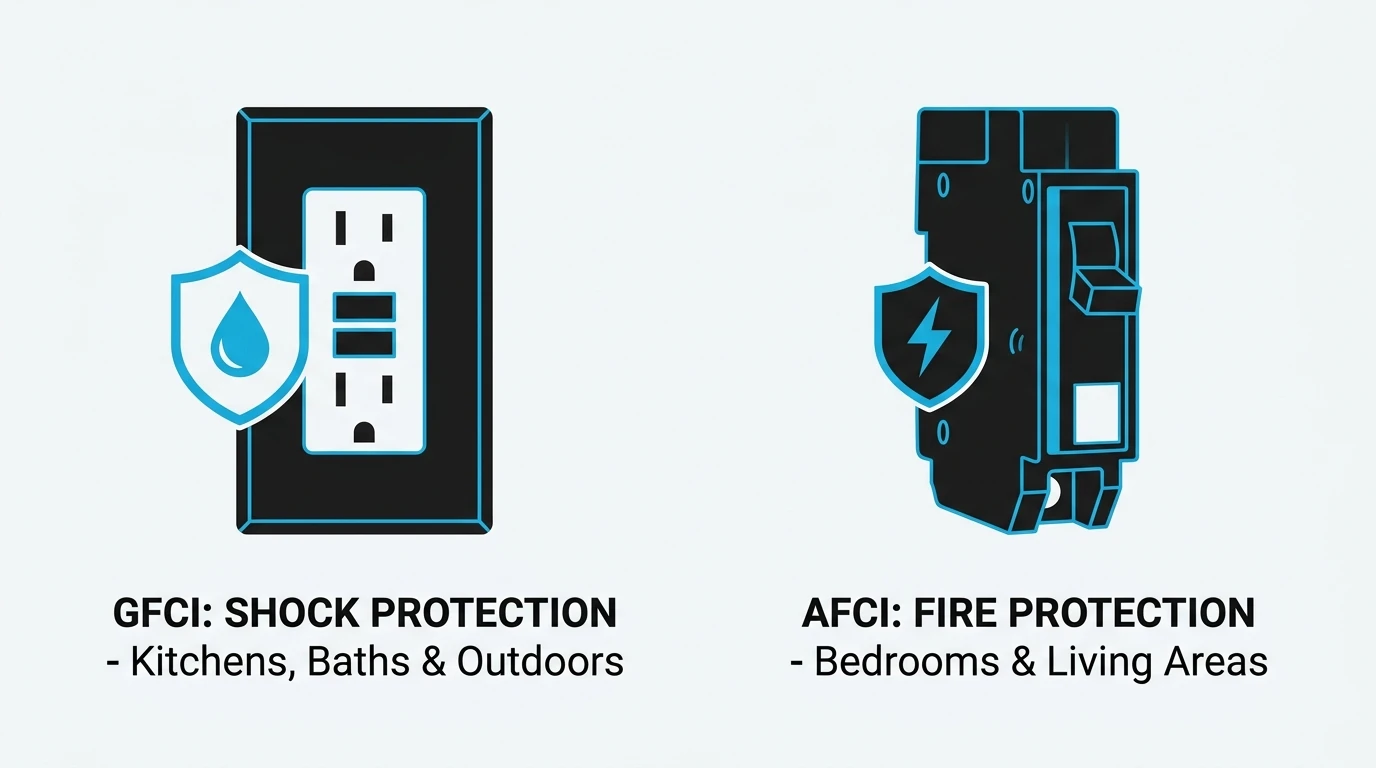
GFCI vs. AFCI Outlets
GFCI outlets protect people from dangerous electrical shocks, while AFCI breakers protect homes from electrical fires. Here is how each device works and where Oregon code requires them.
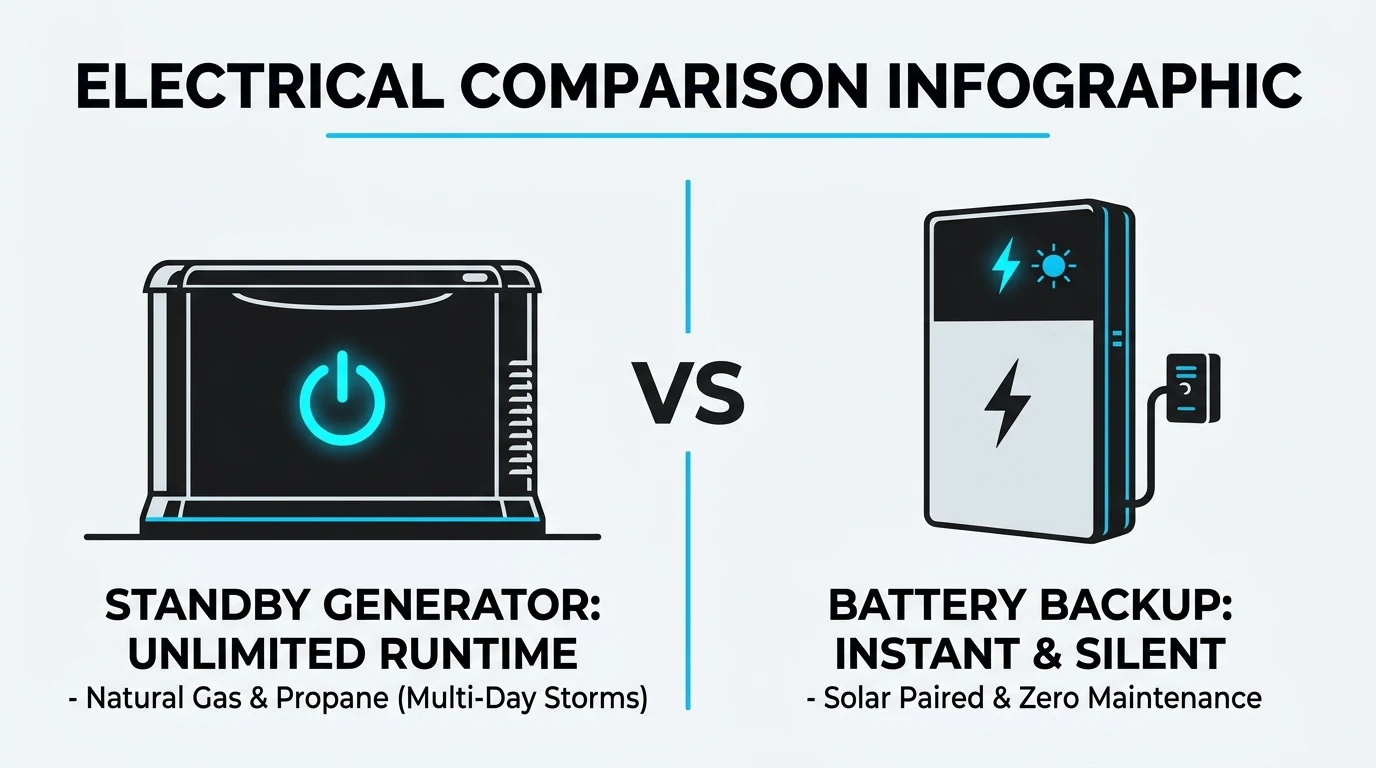
Generators vs. Battery Backup
Comparing standby generators and solar battery backup systems for Oregon power outages. Winter storm runtimes, power capacity, maintenance, and which option fits your home.
Knob and Tube Wiring: Is It Safe?
Knob and tube wiring powered homes built before the 1940s. Here is how to spot it, why it becomes a fire risk with age, and what Oregon homeowners can do about it.
Breaker Keeps Tripping? How to Reset It and Find the Cause
How to safely reset a tripped breaker, the four reasons breakers trip, and the warning signs that mean you need an electrician instead of another reset.
8 Signs You Need an Electrical Panel Upgrade
Flickering lights, a full panel, an old fuse box or a new EV charger on the way. The eight signs your electrical panel is due for an upgrade, and what the process looks like in Oregon.

Outlet Not Working? Why a GFCI Won't Reset and How to Fix It
Dead outlet, half an outlet working, or a GFCI that won't reset? Six quick checks that solve most dead outlets, and the warning signs that mean you should stop and call.
Whole House Surge Protectors: Do You Need One?
A whole house surge protector mounts at your electrical panel and guards every circuit in the home. Here is what it protects, who benefits most, and how it works with plug-in strips.