

Why Is My Outlet Not Working, and Why Won't the GFCI Reset?
Why outlets stop working, why a GFCI outlet won't reset, the warning signs that mean stop using it, and what an electrician checks.
Quick Answer
Most dead outlets trace back to a GFCI that tripped somewhere else, a tripped breaker, or a loose connection at another outlet on the same circuit. A GFCI that will not reset usually has no power reaching it, still senses a ground fault, is wired wrong or has worn out.
Key Guide Highlights

Why Do Outlets Stop Working?
A Tripped GFCI Somewhere Else
A GFCI outlet protects every outlet wired after it on the circuit. A GFCI that tripped in a bathroom can cut power to outlets in another bathroom, the garage or outside. This is the most common reason an outlet seems dead.
A Tripped Breaker
The whole circuit is off at the panel. If it keeps tripping, see our guide on why a breaker keeps tripping.
A Switched Outlet
If only the top or bottom half works, that half is often controlled by a wall switch, common in living rooms and bedrooms for lamps.
A Loose Connection
Outlets on a circuit are wired in a chain. When a connection loosens at one outlet, every outlet after it goes dead. Loose connections also make heat, which is why they are a fire risk.
A Worn Outlet
Outlets lose their grip with age. Plugs sag or fall out and lose contact. A worn outlet should be replaced.
Why Won't a GFCI Outlet Reset?
A GFCI that will not stay reset is usually one of these:
| Cause | Sign | What It Means |
|---|---|---|
| No power to the GFCI | The circuit's breaker is off or tripped | A GFCI needs power to reset |
| Ground fault still present | Outdoor or wet location, often after rain | Water in a box, cover or fixture |
| Faulty device plugged in | Trips when one item is plugged in | The appliance is leaking current |
| Worn-out GFCI | Older unit, will not reset with nothing plugged in | The GFCI needs replacing |
| Wiring problem | A new GFCI that never worked | Line and load wires reversed |
When Should You Stop Using an Outlet?
Stop using it and call an electrician if:
- The outlet or cover plate feels warm or looks scorched
- You smell burning plastic or hear buzzing or crackling
- An outlet sparks when you plug something in
- Several outlets died at once and no breaker or GFCI is tripped
What Does an Electrician Check?
Finding a dead outlet's cause usually takes a few tests:
- Tracing the circuit to find which GFCI or breaker protects it
- Testing for power, ground and correct polarity at each outlet
- Opening the last working outlet in the chain to find the loose or burned connection
- Testing GFCIs and replacing any that no longer trip or reset
- Checking that kitchens, baths, garages, laundry areas and outdoor outlets have GFCI protection where code requires it
Outlet and GFCI Repair From Empyre Electric
We find the failed connection, replace worn outlets and GFCIs, and bring kitchens, baths, garages and outdoor outlets up to current Oregon code. Press the TEST button on each GFCI once a month: it should click off, and RESET should bring it back. If it does not, have it replaced.
Verified by Empyre Electric Licensed Electricians
Written by our licensed electrical team in Woodburn, Oregon (Oregon CCB #249777). Code-compliant, safe, and tailored for residential and commercial electrical systems across Portland, Salem, and the Willamette Valley.
More Electrical Guides
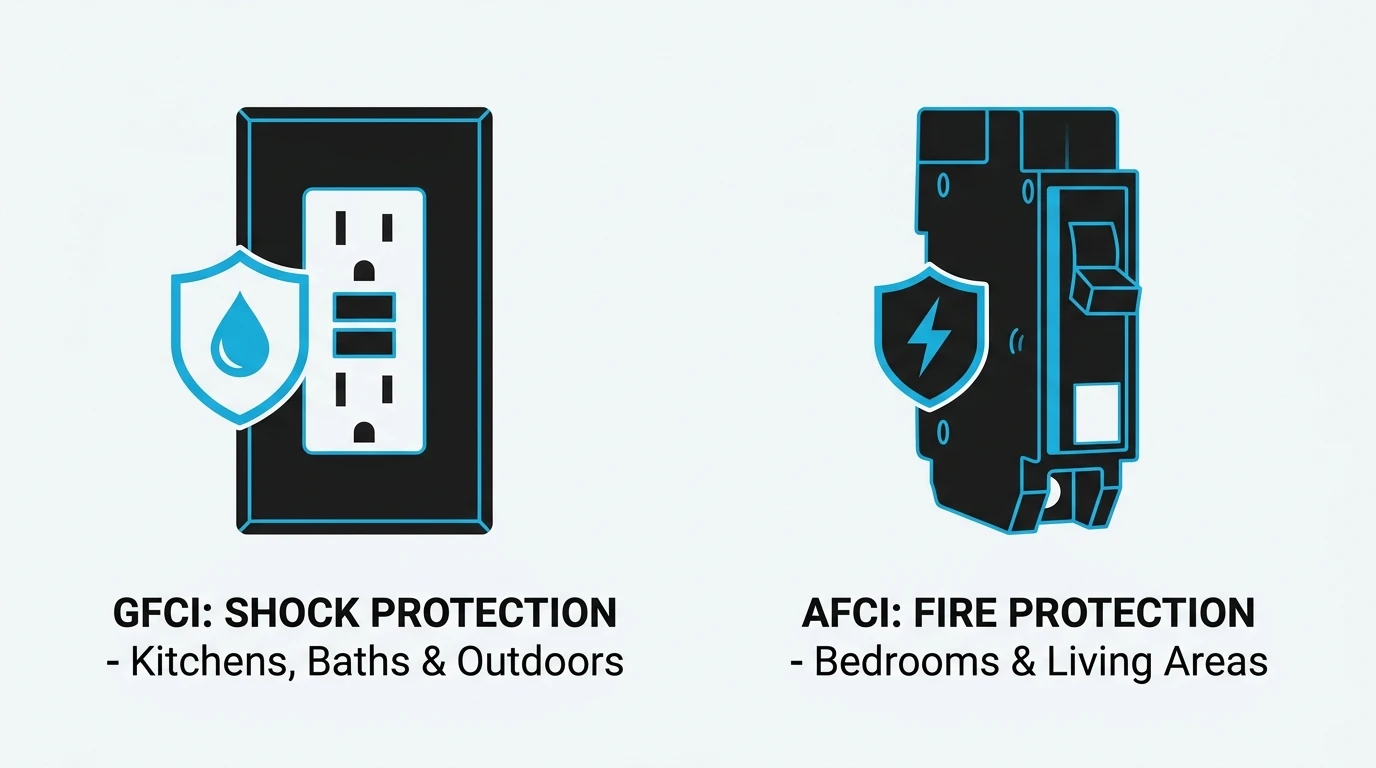
GFCI vs. AFCI Outlets
GFCI outlets protect people from dangerous electrical shocks, while AFCI breakers protect homes from electrical fires. Here is how each device works and where Oregon code requires them.
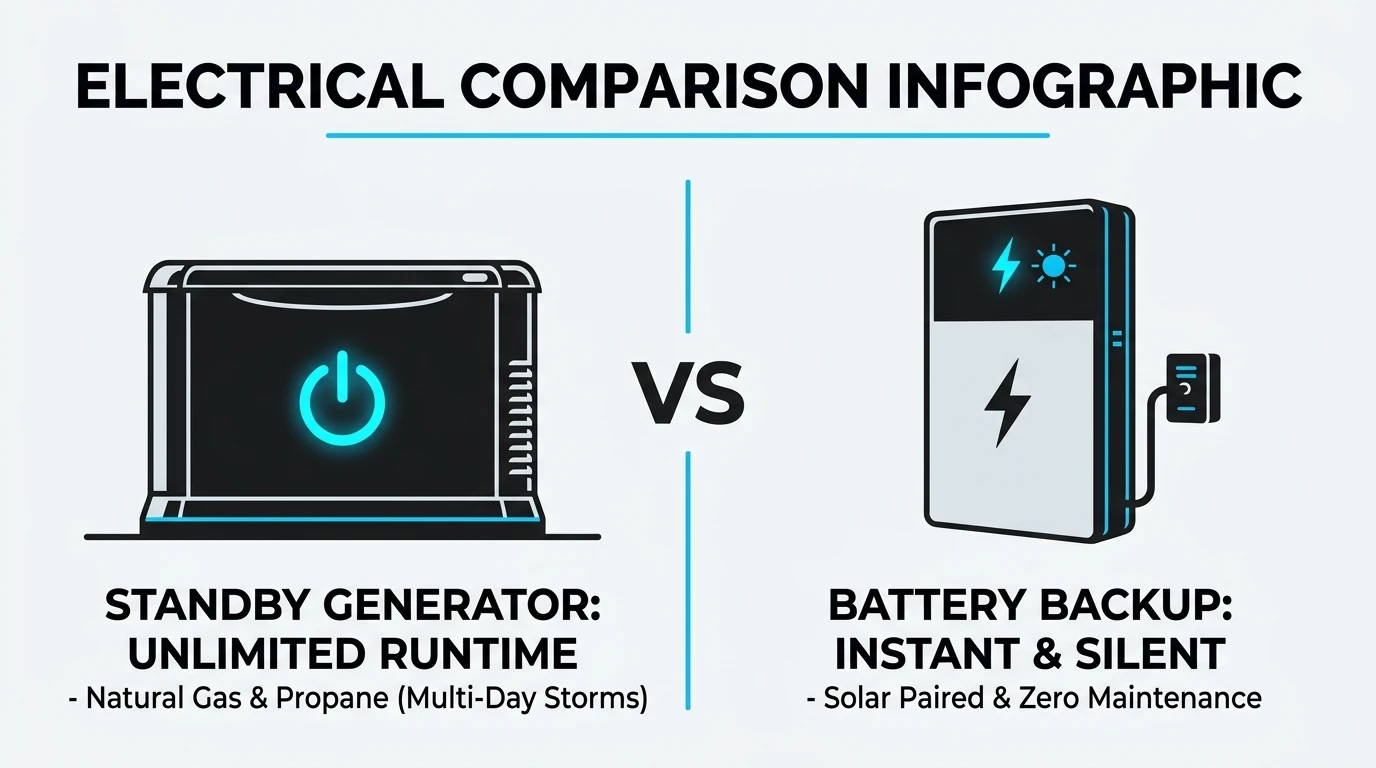
Generators vs. Battery Backup
Comparing standby generators and solar battery backup systems for Oregon power outages. Winter storm runtimes, power capacity, maintenance, and which option fits your home.
Knob and Tube Wiring: Is It Safe?
Knob and tube wiring powered homes built before the 1940s. Here is how to spot it, why it becomes a fire risk with age, and what Oregon homeowners can do about it.
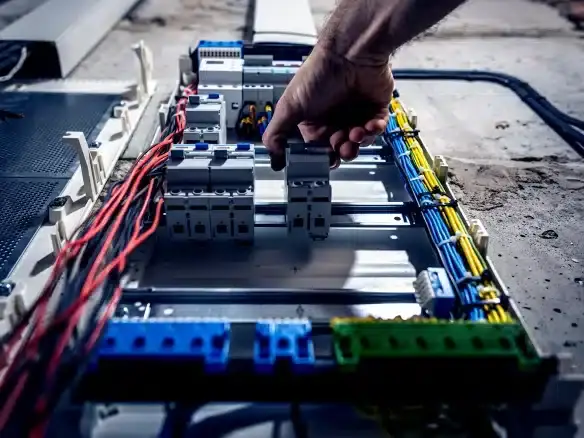
Why Does My Breaker Keep Tripping?
What a breaker trip means, the four reasons breakers trip, what the timing of the trip tells you, and what an electrician does to fix it for good.
8 Signs You Need an Electrical Panel Upgrade
Flickering lights, a full panel, an old fuse box or a new EV charger on the way. The eight signs your electrical panel is due for an upgrade, and what the process looks like in Oregon.
Whole House Surge Protectors: Do You Need One?
A whole house surge protector mounts at your electrical panel and guards every circuit in the home. Here is what it protects, who benefits most, and how it works with plug-in strips.

How Many Outlets Can Go on a 20 Amp Circuit?
The electrical code does not set a hard limit for most home outlets, but there is a practical answer. Here is the common planning rule, the rooms that need their own 20 amp circuits, and why wire size matters.
Level 2 EV Charger Installation at Home
A Level 2 charger can refill most EVs overnight. Here is what a home install involves, how the circuit is sized, hardwired vs. plug-in options, and why the panel and wiring work belongs to a licensed electrician.
Aluminum Wiring in Older Homes: Risks and Fixes
Many homes built in the mid 1960s to mid 1970s have aluminum branch wiring. Here is why it can be a fire risk, the warning signs to watch for, and the repair options a licensed electrician can offer.

Why Do My Lights Flicker?
Flickering lights can be a small nuisance or an early sign of a loose connection. Here is what causes flicker, what each cause means for safety, what an electrician does about it and when it is urgent.
Is 100-Amp Service Enough for Your House?
Many older Oregon homes still run on 100-amp service. Here is when 100 amps is enough, when it is not, what a load calculation shows and when the panel is a safety concern.