
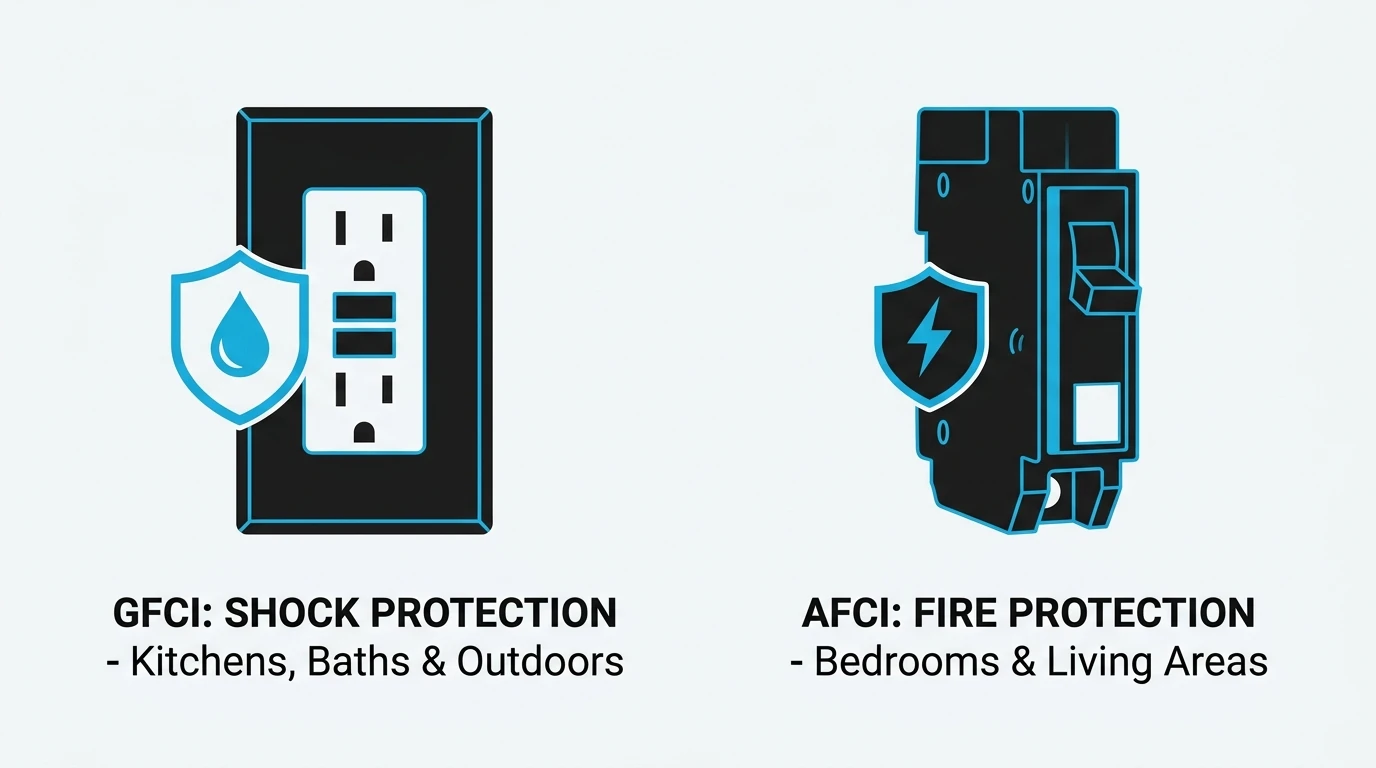
GFCI vs. AFCI Outlets
GFCI outlets protect people from dangerous electrical shocks, while AFCI breakers protect homes from electrical fires. Here is how each device works and where Oregon code requires them.
Quick Answer
GFCI outlets protect people from electrical shocks near water in kitchens and bathrooms. AFCI breakers protect homes from electrical fires caused by sparking or damaged wires inside walls.
Key Guide Highlights
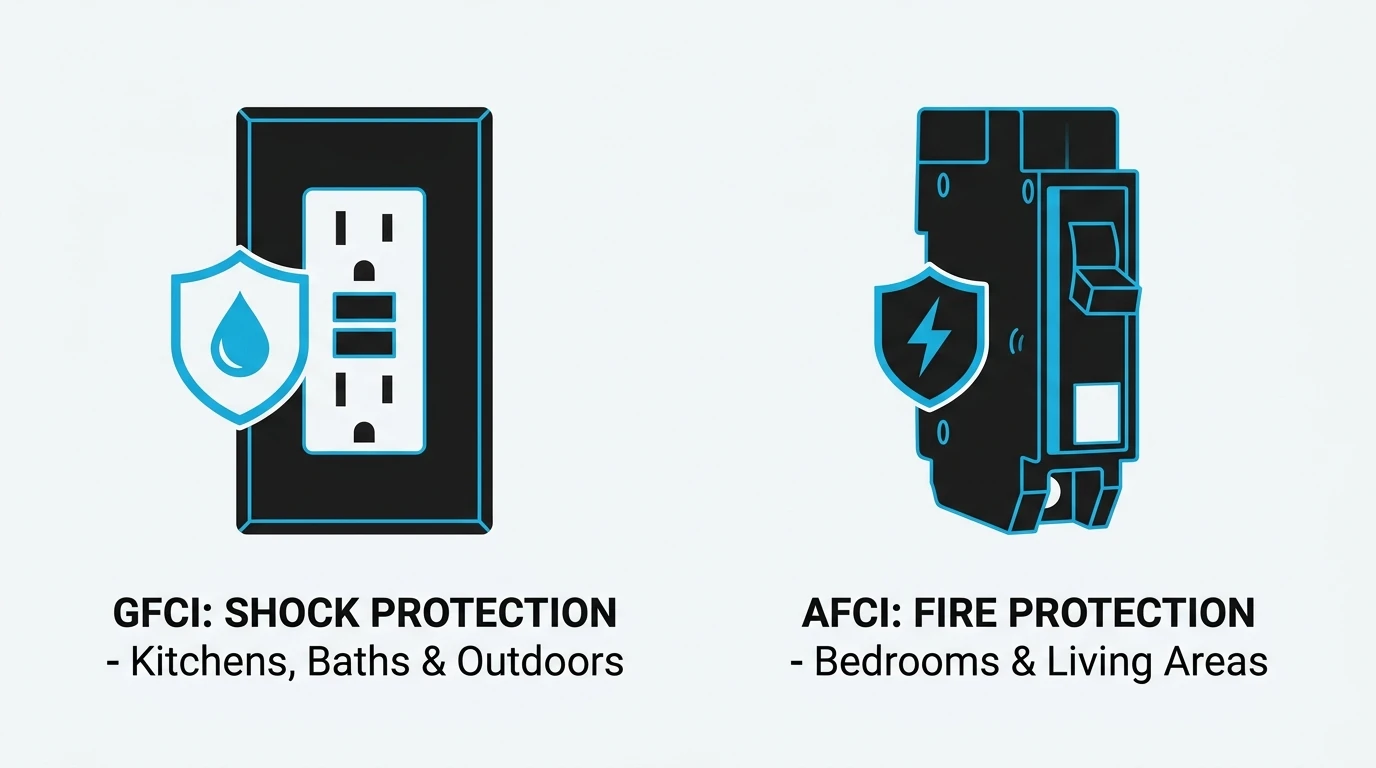
Why Homes Need Both GFCI and AFCI Protection
Electricity makes our lives comfortable, but it carries two major safety risks: electrical shock to people, and electrical fires inside walls. Standard circuit breakers are only designed to protect wires from overloading and melting—they are not sensitive enough to prevent shocks or detect small dangerous sparks.
To keep families and homes safe, the National Electrical Code and the Oregon Electrical Specialty Code (OESC) require two specialized safety devices: GFCI (Ground Fault Circuit Interrupters) and AFCI (Arc Fault Circuit Interrupters). Understanding the difference helps you keep your home up to code and fully protected.
What Is a GFCI Outlet? (Shock Protection)
A GFCI (Ground Fault Circuit Interrupter) is designed specifically to protect people from fatal electrical shocks. You can easily identify a GFCI outlet by the 'TEST' and 'RESET' buttons located on the front face of the receptacle.
How GFCIs Work
A GFCI constantly monitors the balance of electrical current flowing out on the hot wire and returning on the neutral wire. In a normal circuit, the current going out equals the current coming back.
If electricity escapes the circuit—for example, if a plugged-in hair dryer falls into a sink filled with water, or current starts traveling through a person's body—the GFCI senses this tiny imbalance (as small as 4 to 6 milliamps) and cuts power in less than 1/40th of a second.
Where GFCI Outlets Are Required in Oregon
Under Oregon electrical code, GFCI protection is mandatory in any area where water is present or damp conditions exist:
- Bathrooms: All receptacles near sinks, showers, and tubs
- Kitchens: All counter outlets within 6 feet of sinks and appliance locations
- Outdoor Outlets: All exterior receptacles (with weatherproof covers)
- Garages & Workshops: All general-use outlets
- Unfinished Basements & Crawlspaces: All power receptacles
- Laundry Rooms & Wet Bars: All outlets within 6 feet of a water source
What Is an AFCI Breaker? (Fire Protection)
An AFCI (Arc Fault Circuit Interrupter) is designed to protect your home structure from electrical fires. Unlike GFCIs which are commonly built into wall outlets, AFCIs are almost always installed directly in your main electrical breaker panel.
How AFCIs Work
An arc fault occurs when electrical current jumps or sparks across a gap between damaged wires, loose screw terminals, or cords pinched by furniture. These sparks can reach temperatures exceeding 10,000°F, quickly igniting wood framing, insulation, or drywall paper inside walls.
Standard circuit breakers cannot detect arcing because the sparks do not draw enough total amperage to trigger an overload. AFCI breakers use smart microprocessors to recognize the unique waveform signature of dangerous sparks and shut off the circuit before heat can build up.
Where AFCI Protection Is Required in Oregon
Modern building codes require AFCI protection on almost all 120-volt, 15-amp and 20-amp residential circuits:
- Bedrooms and guest rooms
- Living rooms and family rooms
- Dining rooms and home offices
- Hallways and closets
- Laundry rooms and kitchens (for non-GFCI branch wiring)
GFCI vs. AFCI: Side-by-Side Comparison
Here is a quick look at how GFCI and AFCI devices compare across key features, functions, and locations:
| Feature | GFCI (Ground Fault) | AFCI (Arc Fault) |
|---|---|---|
| Primary Hazard Prevented | Electrical Shock & Electrocution | Electrical Fires & Arcing Sparks |
| Where It Is Installed | Wall Outlets or Panel Breakers | Main Electrical Breaker Box |
| Trigger Mechanism | Current leaking to ground (4–6 mA) | Sparks & arcing waveform signatures |
| Key Locations in Oregon | Kitchens, Baths, Outdoors, Garages | Bedrooms, Living Rooms, Closets |
| Visual Identification | 'TEST' & 'RESET' buttons on receptacle | Test button on breaker in panel |
What Are Dual-Function AFCI/GFCI Breakers?
If you need both shock protection and fire protection on the same circuit (such as in modern kitchens or laundry rooms), you can install a Dual-Function AFCI/GFCI Circuit Breaker in your main panel.
Dual-function breakers provide 100% code compliance from the breaker box, protecting the entire length of the wire inside the wall all the way to every outlet and light switch on that branch.
How to Test Your GFCI and AFCI Devices
Both GFCI outlets and AFCI breakers have built-in test buttons. Electrical manufacturers recommend testing them once a month to ensure the internal sensors are working properly:
Testing a GFCI Outlet
1. Plug a lamp into the outlet and turn it on.
2. Press the 'TEST' button on the outlet face. The lamp should turn off immediately, and the 'RESET' button should pop out.
3. Press the 'RESET' button firmly until it clicks back in. The lamp should turn back on.
If the lamp stays on when you press 'TEST', or the outlet refuses to reset, the internal mechanism has failed and must be replaced by a licensed electrician.
When to Call Empyre Electric
If you have older two-prong ungrounded outlets, breakers that trip frequently, or outdated fuse boxes without GFCI/AFCI protection, our licensed Oregon electricians can inspect your home and install safe, modern breakers.
Empyre Electric provides clear upfront estimates, pulls all required city permits, and guarantees our work passes local electrical inspections.
Verified by Empyre Electric Licensed Electricians
Written by our licensed electrical team in Woodburn, Oregon (Oregon CCB #249777). Code-compliant, safe, and tailored for residential and commercial electrical systems across Portland, Salem, and the Willamette Valley.
More Electrical Guides
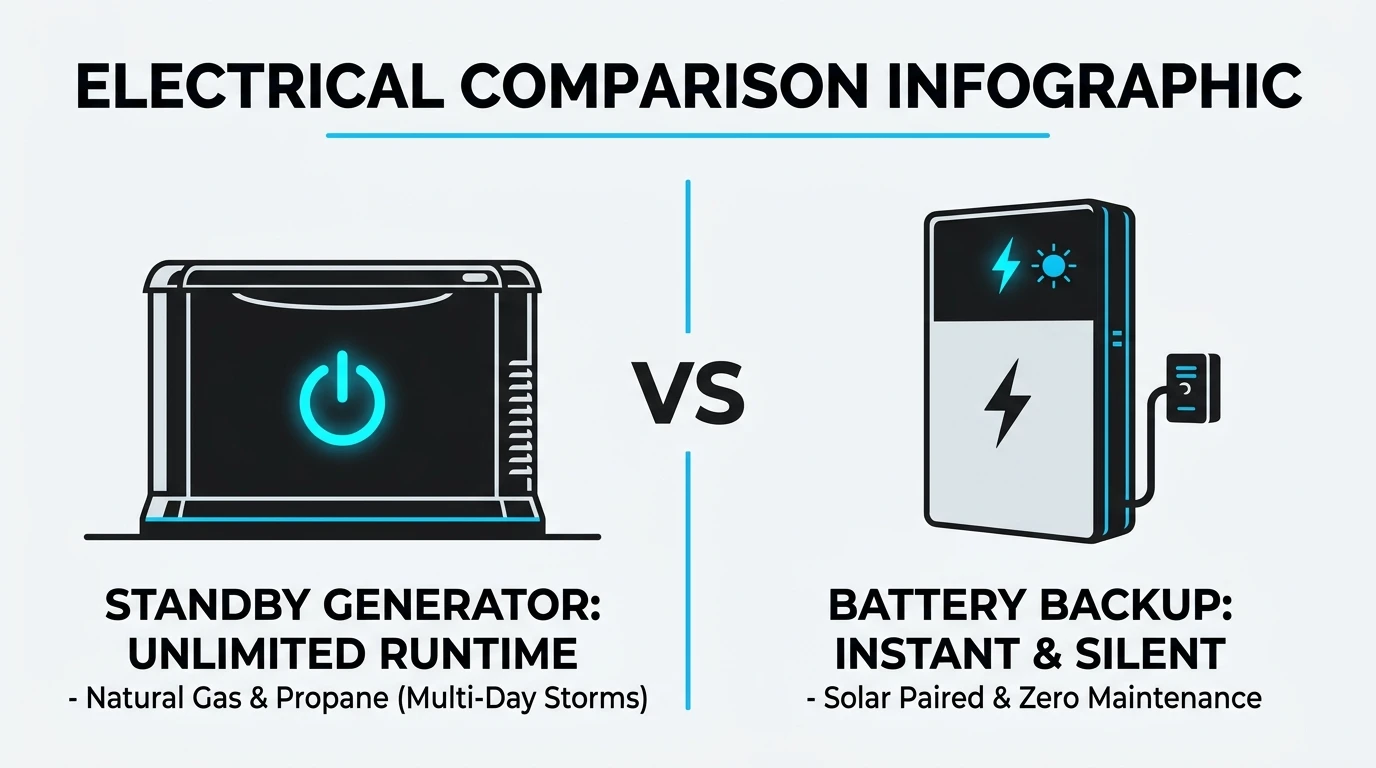
Generators vs. Battery Backup
Comparing standby generators and solar battery backup systems for Oregon power outages. Winter storm runtimes, power capacity, maintenance, and which option fits your home.

Knob and Tube Wiring: Is It Safe?
Knob and tube wiring powered homes built before the 1940s. Here is how to spot it, why it becomes a fire risk with age, and what Oregon homeowners can do about it.
Breaker Keeps Tripping? How to Reset It and Find the Cause
How to safely reset a tripped breaker, the four reasons breakers trip, and the warning signs that mean you need an electrician instead of another reset.
8 Signs You Need an Electrical Panel Upgrade
Flickering lights, a full panel, an old fuse box or a new EV charger on the way. The eight signs your electrical panel is due for an upgrade, and what the process looks like in Oregon.

Outlet Not Working? Why a GFCI Won't Reset and How to Fix It
Dead outlet, half an outlet working, or a GFCI that won't reset? Six quick checks that solve most dead outlets, and the warning signs that mean you should stop and call.