
Knob and Tube Wiring: Is It Safe?
Knob and tube wiring powered homes built before the 1940s. Here is how to spot it, why it becomes a fire risk with age, and what Oregon homeowners can do about it.
Quick Answer
Knob and tube wiring is not automatically dangerous, but at 80 to 100+ years old it has no ground, brittle insulation and often unsafe splices. It becomes a fire risk when buried in insulation, overloaded or modified. Most homeowners have it inspected and replaced.
Key Guide Highlights
What Is Knob and Tube Wiring?
Knob and tube was the standard way to wire houses from the 1880s into the 1940s. Instead of a single cable, it runs two separate wires, one hot and one neutral. White ceramic knobs hold the wires away from the wood framing, and ceramic tubes protect them where they pass through joists and studs.
Plenty of Portland, Salem and Willamette Valley homes from that era still have some of it, often hidden behind plaster walls and under attic insulation.
How to Tell If Your Home Has It
You can often spot it without opening a wall:
- White ceramic knobs or tubes on the joists in the attic or basement
- Single, cloth-wrapped wires running a few inches apart
- Two-prong outlets throughout the house
- A fuse box instead of a breaker panel, or a small older panel
- A home built before about 1950 that has never been fully rewired
Why It Becomes a Problem
The design was sound for its time. The issues come from age and from how houses have changed around it.
No Ground
There is no equipment ground, so it cannot protect you or your electronics the way modern grounded circuits do. Three-prong outlets installed on it without proper protection are a code violation and a false sense of safety.
Brittle Insulation
The rubber and cloth insulation dries out and cracks after decades of heat. Exposed copper near wood framing is a fire risk.
Buried in Insulation
Knob and tube was designed to cool in open air. When blown-in or batt insulation covers it, heat builds up. The electrical code prohibits insulation in contact with it for that reason.
Modern Loads and Bad Splices
It was never meant to carry space heaters, microwaves and window AC units. Decades of do-it-yourself additions also leave splices outside of junction boxes.
Your Options
There is no one answer for every home. A licensed electrician should inspect it first.
| Option | What It Involves | Good For |
|---|---|---|
| Inspection only | Electrician checks condition, splices and insulation contact | Home purchases and insurance requests |
| Partial rewire | Replace the highest-risk circuits first | Kitchens, baths and circuits under insulation |
| Full rewire | Replace all remaining knob and tube with modern grounded cable | Remodels, additions, panel upgrades |
Until It Is Replaced
A few steps lower the risk in the meantime:
- Do not add insulation over it, and do not let an insulation contractor blow over it
- Avoid space heaters and other high-wattage appliances on old circuits
- Never install a larger fuse or breaker than the wire is rated for
- Ask an electrician about GFCI protection for two-prong outlets
Rewiring an Older Home With Empyre Electric
Our licensed Oregon electricians rewire older homes with as little wall damage as possible, working through attics, basements and existing openings. We pull the permit, coordinate the inspection and leave you with a grounded, code-compliant system.
Verified by Empyre Electric Licensed Electricians
Written by our licensed electrical team in Woodburn, Oregon (Oregon CCB #249777). Code-compliant, safe, and tailored for residential and commercial electrical systems across Portland, Salem, and the Willamette Valley.
More Electrical Guides
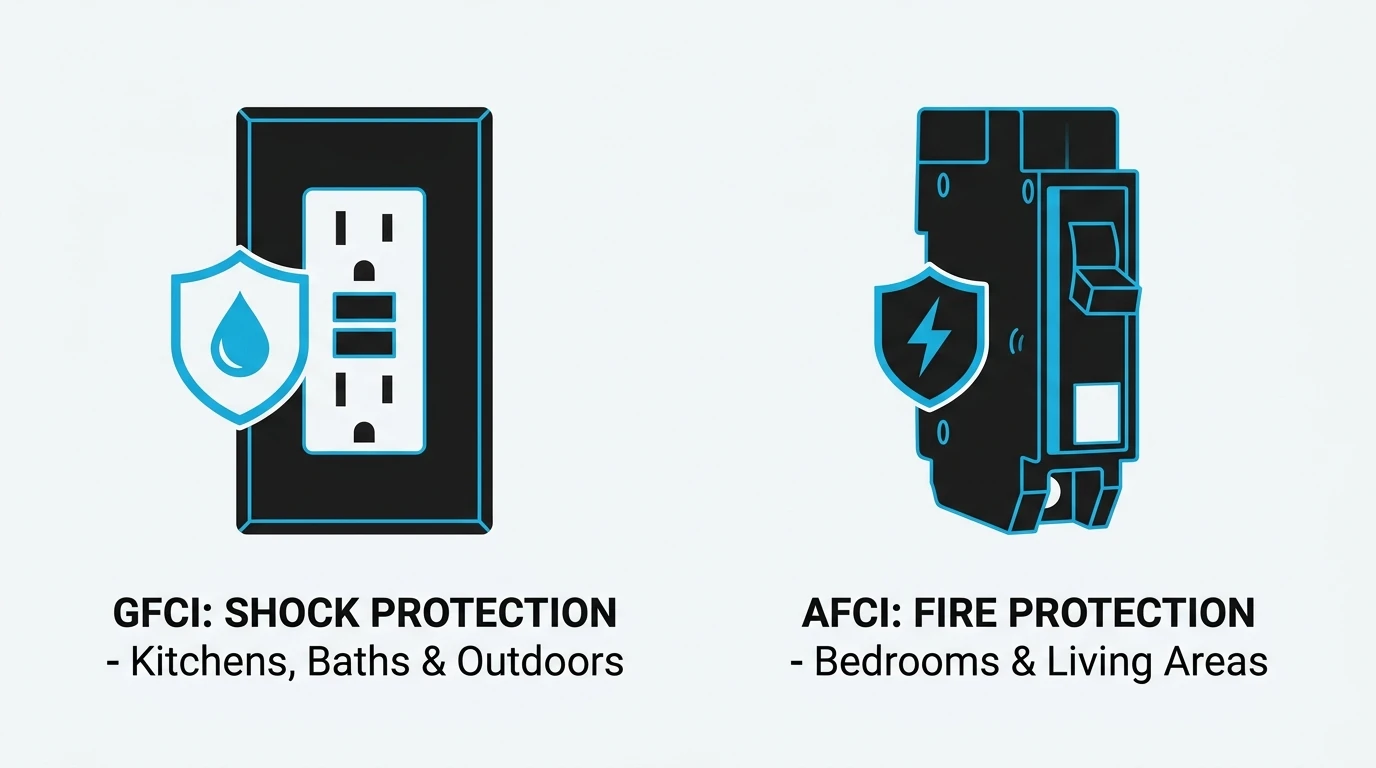
GFCI vs. AFCI Outlets
GFCI outlets protect people from dangerous electrical shocks, while AFCI breakers protect homes from electrical fires. Here is how each device works and where Oregon code requires them.
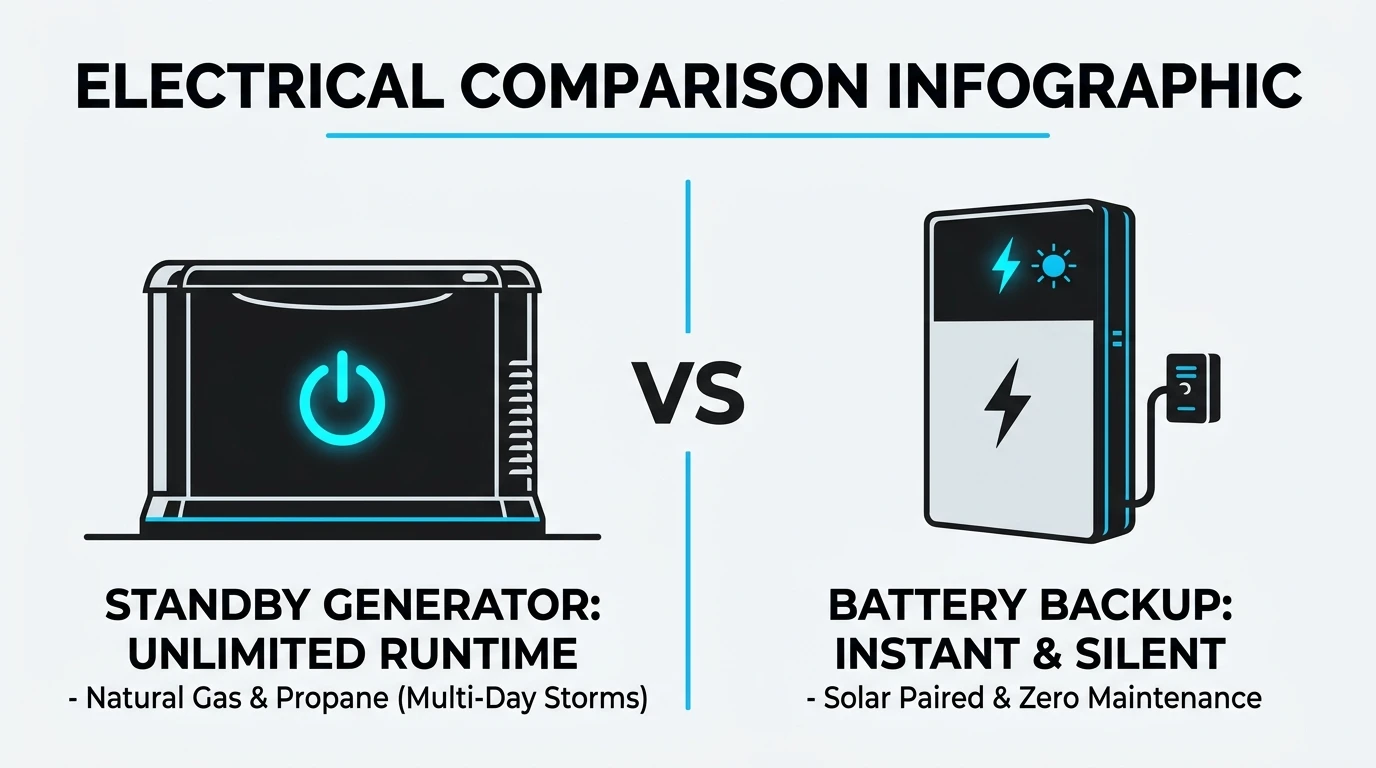
Generators vs. Battery Backup
Comparing standby generators and solar battery backup systems for Oregon power outages. Winter storm runtimes, power capacity, maintenance, and which option fits your home.
Breaker Keeps Tripping? How to Reset It and Find the Cause
How to safely reset a tripped breaker, the four reasons breakers trip, and the warning signs that mean you need an electrician instead of another reset.
8 Signs You Need an Electrical Panel Upgrade
Flickering lights, a full panel, an old fuse box or a new EV charger on the way. The eight signs your electrical panel is due for an upgrade, and what the process looks like in Oregon.
Outlet Not Working? Why a GFCI Won't Reset and How to Fix It
Dead outlet, half an outlet working, or a GFCI that won't reset? Six quick checks that solve most dead outlets, and the warning signs that mean you should stop and call.